Women’s Songs from Haryana & Bihar: Screenings at Indian Music Experience Museum, Bangalore
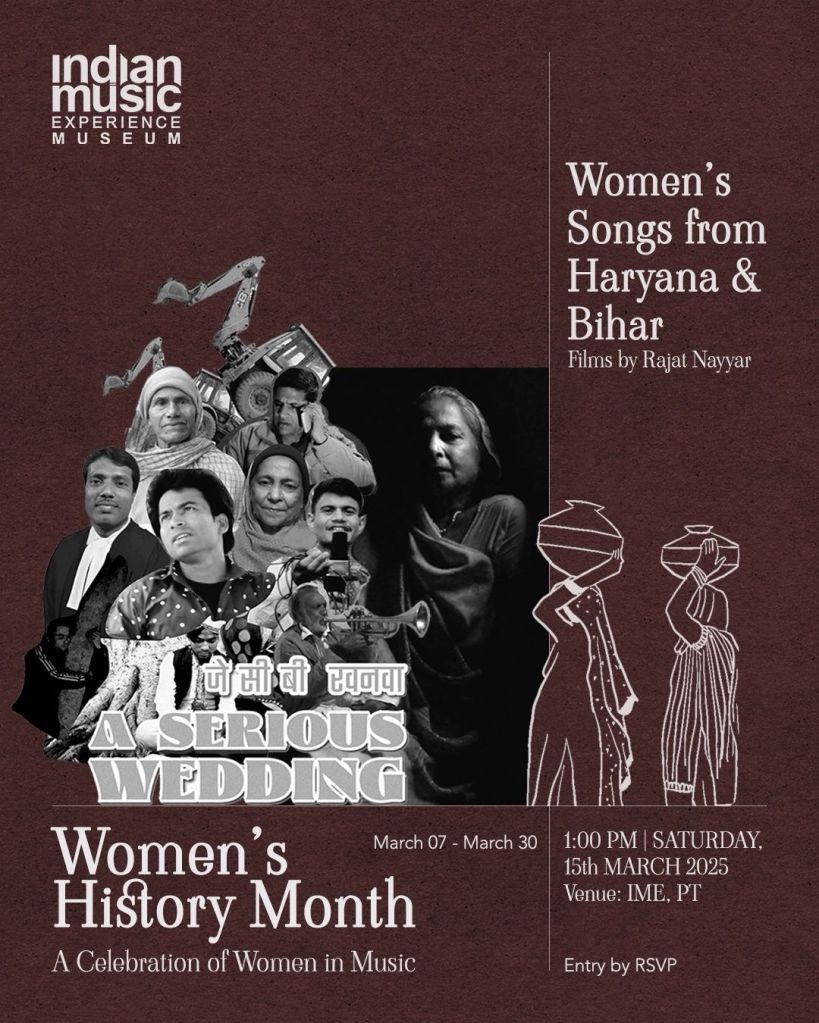
On March 15, 2025, I had the privilege of screening three of my films—Jakari, Ropani, and A Serious Wedding—at the Indian Music Experience Museum (IME) in Bangalore as part of their Women’s History Month program. This festival, curated to honor and amplify the contributions of women in shaping India’s musical landscape, provided a meaningful platform to showcase films that center women’s songs and vocal traditions in rural Bihar and Haryana.
Read more about the event here: IME Event Page
Each of these films emerges from long-term collaborations with rural communities, exploring the ways in which women use songs—not only as expressions of memory, resistance, and everyday life but also as tools to navigate environmental, spiritual and social transformations. Through ethnographic and ethno-fiction filmmaking, I aim to move beyond observational documentation and co-create speculative narratives with community members—allowing them to re-imagine vocal traditions and rehearse futures that might have otherwise seemed impossible.
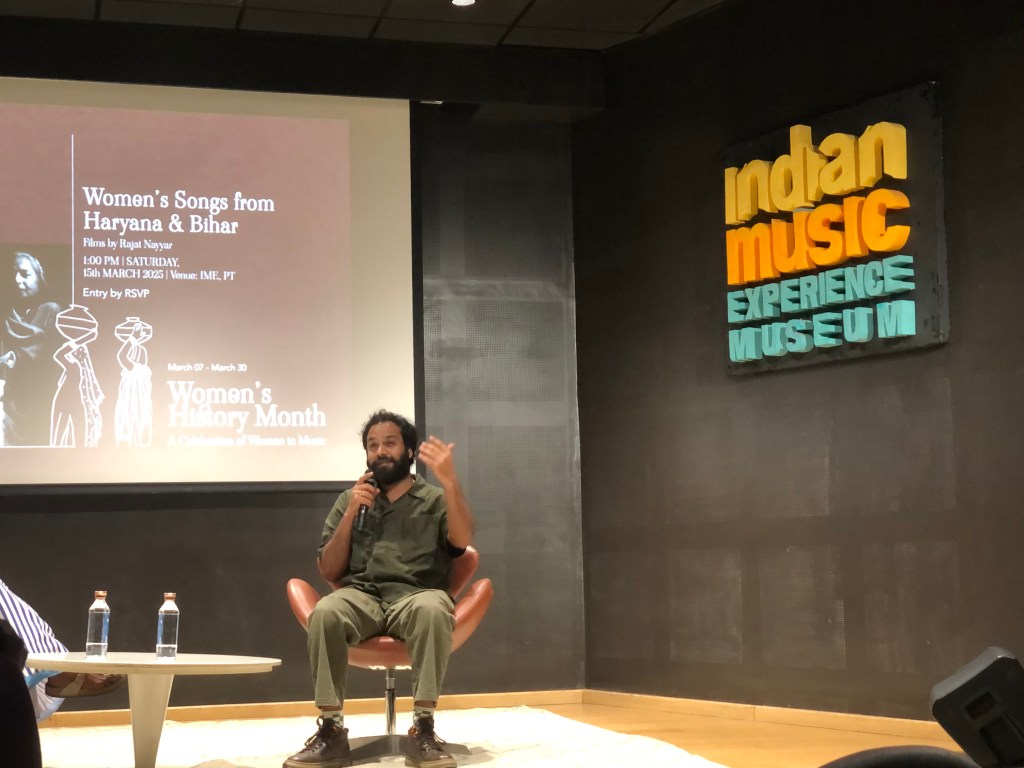
During the screening, I had the opportunity to discuss the ethics of collaborative ethnographic filmmaking with Preema John (Museum Director):
- How do rural women’s vocal traditions, often perceived as ‘fixed in tradition,’ actively redefine their futures through songs, rituals, and storytelling?
- What ethical considerations arise when documenting these traditions, especially in collaborative and community-driven projects?
- How can experimental ethno-fiction methods move beyond documentation and archiving to become a filmmaking practice that is created with and for rural communities—one that amplifies their vocal traditions and aligns with their activist imaginaries?

This event was also a reminder of why I continue working with communities to tell stories that address urgent environmental and social challenges. In Bihar, some of my young collaborators have already begun imagining a new film about water scarcity in their village—a way to collectively speculate on strategies for survival and resilience. This kind of storytelling is not just about representation; it’s about creating spaces for communities to reimagine their own futures.
A big thank you to Sarvar Kahlon (Program Curator) and the IME team for curating this program and fostering such an important dialogue. Looking forward to more screenings, collaborations, and ways to experiment with storytelling in the coming months!
 Espírito Kashi
Leave a comment